28 October 2013

Review: Machete Kills

(Dir: Robert Rodriguez, 2013)

The original concept of Machete is a stroke of genius. As a trailer in the middle of the Grindhouse experience, and playing before Planet Terror, it runs like a two minute comedy of everything you'd want to see in an excessive trashy B-movie, hitting the nail on the head perfectly. If it was real this film would be amazing! And then this short punchy idea was suddenly a 105 minute film, with a proper story and everything, and maybe for that reason it never felt like it quite lived up to its potential. The revenge theme in the original trailer fit right, but bringing in the weighty immigration theme, though real world important, seems almost too alienating from the trashy concept of it all. Yet the casting of a bunch of actors whom you wouldn't expect to see in a film like this was inspired, and there is plenty of throwback to the grindhouse era. As such Machete the film is never less than a fun watch, but it's difficult to wish the nature of the opening sequence or some of the more insane scenes, like the man himself jumping from a window using someone's unraveling intestines as a rope, permeated throughout much more of it. Both Planet Terror and Hobo With A Shotgun did a far better job with this aesthetic.


So did we need a sequel and does it redress the potential that's lacking? Well, arguably yes on both counts. Plenty of shitty films generate many sequels so whether we need one or not is a redundant point, but the fact we get more of the character Machete is only a good thing. The question of whether Machete Kills redresses the balance enough is a tough one though. This is a film with clear intentions to amp up the ridiculousness (obviously it's looking to take that interstellar with the repeatedly suggested third part), with a story that veers more into camp stupidity. If the original trailer suggested a certain grindhouse dirtiness that was mostly scrubbed away in the first film, we're in shiny clean territory now. Sure there's lots of over-the-top violence and excessive spurting and splattering of blood, but the overall tone feels like a late seventies Bond film gone awry, mostly due to the second half of the film and chief villain Voz (Mel Gibson), with his clichéd space obsessed megalomania. 

Gibson is an example of the crazy casting that Robert Rodriguez seems to be pulling off with these films, alongside the likes of Charlie Sheen playing the President and Antonio Banderas / Cuba Gooding Jr / Lady Ga Ga / Amber Heard / Vanessa Hudgens appearing in small random roles. Most of the cast from the first film reappear in some capacity (villains aside) and Danny Trejo continues to play Machete like the badass he is, but this time round you can really tell he's starting to look old. Yet too many of these characters don't add anything and feel pointless. What's the point of El/La Camaleón? That's a character with lots of focus because of an intriguing idea, but who never actually serves the story. Whilst both Mendez and Desdemona and her band of killer ladies appear to be pointless window dressing. Like last time round these are symptoms of an overlong film - kept to a lean 85-90 minutes Machete Kills would've had way more punch.

Machete Kills other big failing is the time it spends trying to set up the third film - sure that sounds like it'll be even more batshit crazy, but this film feels purely like a conduit to get to that point and so will struggle to stand on its own. All that said, Machete Kills still delivers on the fun, it's just way less grimy than it ought to be. At least Gibson manages to bring a touch of his patented crazy. Regardless, I'm glad there's someone making films like this and that they're getting released at the cinema, although judging by box office numbers how long that continues for will be interesting to see. Machete Kills isn't great and the first is better, but it's still damn enjoyable for what it is.

12 October 2013

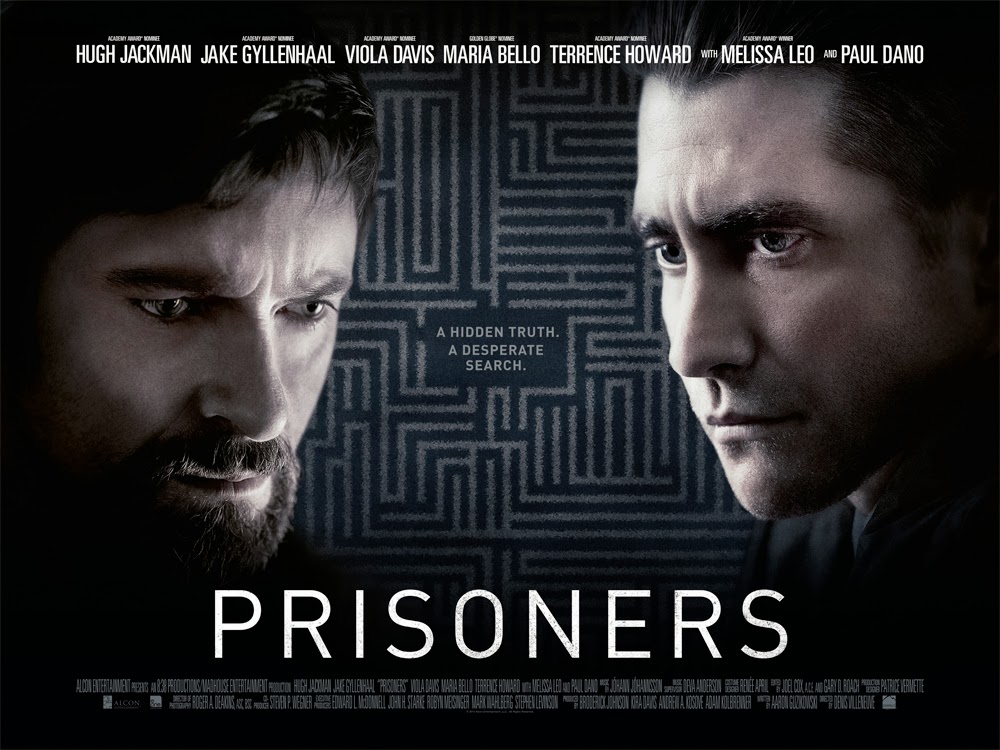
Short review: Prisoners

(Dir: Denis Villeneuve, 2013)

Prisoners arrived on a wave of high hopes - a bleak looking story played out by decent actors with hints of Se7en and maybe something vaguely labyrinthine suggested. And of course a bunch of reviews happily placing it up there with the best of the year. So it's a shame the film doesn't quite live up to any of this promise. The initial staging is intriguing despite being entirely unoriginal, which leads to a long, excessively bloated character piece that only feels like it has any impetus in it's initial frenzy and as it builds to it's intriguing denouement. Speaking of David Fincher films I was reminded more of the procedural Zodiac (lead star aside) as it tries to tell a slow methodical story. Except the difference between Fincher and director Denis Villeneuve is massive - cutting 30-40 mins out of Prisoners would've helped the story immeasurably.


What Prisoners has on it's side is a handful of intriguing ideas, not least how far a parent would go to get their child back and the blind ignorance to actual evidence that leads to devastating decisions in the process of doing so. Once we get more answers things become interesting, but the Se7en comparison amounts to about one sequence (hell at times it's almost more reminiscent of Saw), yet it could've done with more of this, and it's a film that feels depressing not least because of the subject matter but also the snowbound Pennsylvania setting, but lacks any of the visual verve of the aforementioned film. Hugh Jackman plays a determined everyman well, he's good in this sort of role. However Jake Gyllenhaal's detective is the more interesting character, but a frustrating lack of real development or understanding about who he is when there's clearly more to him than generic cop really limits the role. It's tempting to praise Paul Dano but he usually plays awkward misfit well so it's hardly a stretch for him. Prisoners might've been a more impactful film if it was considerably shorter, but ultimately it's a pretty standard example of an abduction film that in reality doesn't maximise the potential of it's ideas.

11 October 2013

Review: Rush

(Dir: Ron Howard, 2013)

It's a curious thing that despite Formula One being such a huge global sport, it's one mostly ignored by the film industry. Most films dedicated to automotive love seem to be in the vein of The Fast and Furious franchise or the metal fetish of the likes of Gone In Sixty Seconds. Actual motor racing appears to be a secondary consideration compared to street racing, so you get the odd trashy attempt like Renny Harlin and Sylvester Stallone's Driven, or the inevitable NASCAR films like Talladega Nights and the mighty Days of Thunder. But when you consider this is a sport renowned for glamour that's fast, dangerous and potentially fiery, especially when shot or edited in the right way, the visual impact for storytelling is there. Hell, even Iron Man 2's Monaco segment was more thrilling than the likes of Driven. Fortunately Rush goes a long way towards justifying why there should be more.

Tackling the real life rivalry of James Hunt (Chris Hemsworth) and Nikki Lauda (Daniel Brühl), Rush touches their early days in Formula 3 before both are jolted into the big league and the fastest cars in the world, tracking the 1975 and particularly 1976 seasons. This is a sport intensely rich with rivalries and to be at the top exudes the essence of power, far more so than most other sports. These are men in control of some of the most powerfully wild man-made beasts, capable of destroying their lives with just the one tiniest miscalculation or mistake. The psychology of what drives these men to walk this knife edge is fascinating.


Hunt is the cavalier playboy for whom life should just be a party, with his dashing good looks, blonde locks and acres of charm carrying him from woman to woman with wild abandon. The desire to drive and be the best fuels his desperate need to win, paralleling his legendary sexual prowess. These are the two things he's good at so these are the two things he fully embraces in life. Hemsworth is dripping with each of these characteristics - you can see why everyone would love him and wants to be around him and why women so easily fall into his arms. Maybe there's a little bit of latent Thor still in there? 

Lauda is the more interesting, studious, detail-oriented counterpoint to Hunt. A man obsessed with the minutiae of what it takes to win, calculating every single way to make his car the perfect machine. He's a man with something to prove. His relationship with Marlene (Alexandra Maria Lara) is arguably his most curious characteristic, something he wants but struggles to balance with the risk of his job, so the eventual realisation of its importance is touching. Brühl is excellent, taking the awkward social aspects of the man and not making them a barrier to the intrigue surrounding him. And once covered with prosthetics he delivers a stoic heartfelt performance.

But where Rush really comes alive is in the visual department. It's a film that allows you to feel intimate with the drivers and their machines, with editing that cuts between pistons firing, engines sparking and rubber shimmering from the heat. A lot of the racing has the vague feel of being computer generated but that never detracts because it feels visceral. Although a tendency to descend into montage too regularly, something all racing films seem to do, feels like it limits the narrative, yet it still feels electric. This is aided by the music choices - always very much of the era and adding a little excitement and glamour to events. And I couldn't help but smile when a version of Steve Winwood's 'Gimme Some Lovin'' is used over a racing sequence - straight flashback to Days of Thunder!

Rush works thanks to the way it executes the racing scenes and brings the thrill of not just Formula One but motor racing as a whole onto the screen, coupled with the emotional intensity of two larger than life figures. The fact that this story is based on reality helps greatly so any thoughts of it veering into cliche are negated by the truth. By almost underplaying the inevitably fated moment of destruction and its aftermath in the latter part of the film, this actually creates a greater impact. It could be imagined that such a film is essentially costume drama for men, but putting aside the flame retardant overalls and helmets, Rush is a film that should appeal to anyone who likes gripping or superior storytelling, regardless of their thoughts on the sport, much in the way Senna expertly played out its heartbreaking story.

26 September 2013

Short Review: R.I.P.D.

(Dir: Robert Schwentke, 2013)

R.I.P.D. is a film without pretension, without belief that it's any other than generic and is just merely trying to be lighthearted entertainment. That's not such a bad thing and in essence it succeeds. It's so lean that it barely wastes time with any extraneous exposition, rapidly shooting us straight into the story of Ryan Reynold's shot-on-duty police officer who has been summoned to work for the Rest In Peace Dept - bringing back dead souls hiding out on Earth and partnering him with Jeff Bridges' old hand Sheriff. The film ain't rocket science and it has more than a strong sense of Men In Black about it, but like that film it is also based on an existing comic book and is gleefully over-the-top with its CGI monsters and end of the world destruction.


What does elevate the film is Bridges, who despite feeling like he's slumming it a bit puts in enough effort to be the best thing here. His Sheriff is resolutely a hard-assed cowboy who believes in what has to be done but only in his way, the rules be damned. Firmly sticking to this gives us some great one-liners and an interesting character. Ryan Reynolds on the other hand appears stuck in the sort of bland role that's dominated his career and Kevin Bacon is pure cartoon villain cliché. Which is actually a fairly apt description of the film as a whole. Still, the humour from Bridges character and the conceit of how Earth's residents actually see these dead police officers is enough to make it a more enjoyable than expected watch. The concept itself has lots of potential so it's a shame R.I.P.D. is such a by-the-numbers film with really average effects, but it is at least kinda fun if you're really not expecting much from it. 

25 September 2013

Short Review: The Great Beauty

(Dir: Paolo Sorrentino, 2013)

La Grande Bellezza is a beguiling film that pulls the viewer through a range of emotions on its continually intriguing journey of an aging writer (Toni Servillo) in Rome. Seemingly oblivious to the marching of time he spends his nights partying with friends as if he’s a third of his age, living a hedonistic lifestyle that appears fun but seems to hide a sense of loss that he feels deep within. He wants to be immersed with beauty, be it from the city he calls home and the flat overlooking the Coliseum, to romancing an aging stripper, yet all this seems like a crutch when he can never get back the one great beauty that existed and then eluded him in his youth. Something he only seems to realise now as time races up on him and those around him.


Rome is as much a character in the film, with plenty of lingering shots taking in its epic beauty but in perhaps not the most obvious places. It seems like the side that people residents who enjoy the city actually see. The fluid camera makes it feel like we’re moving around the city and getting lost in it ourselves, whilst every shot is framed to maximise the impact of its subjects. A similar effect comes from the broad range of musical styles employed on the soundtrack which ensure things never get boring. Servillo is excellent; instantly likeable and sympathetic as the madness of life progresses around him. Yet all the characters surrounding him are unique and intriguing on their own little ways too. Not only a film of total beauty but one that offers a full range of depth, life and comedy - La Grande Bellezza is fantastic and up there as one of the best films I’ve seen this year.

18 September 2013

Review: Insidious // Insidious: Chapter 2

(Dir: James Wan, 2011 // 2013)

Insidious is a superior modern horror film because it gets the basics right and adds its own satisfying twist. I wish more modern horror films could follow this simple rule. For a good proportion of the film it's very content to just slowly build tension and atmosphere, creating a haunted environment that's intriguing and unsettling. Where it goes in the final portion is where the film undoubtedly loses some people, but it's a fascinating direction that allows for more creativity and to amp things up, which is something needed in horror. Take The Conjuring, director James Wan's other recent ghost story; a decent film drenched in atmosphere, but it ends with a generic conclusion that makes you wish for more. Insidious by comparison feels like it's running with scissors, particularly as everything escalates.

But even more impactful is an understanding of technique. Surely the three best ways to create fear are sound design, editing and placing of the camera. The scares are well assembled in Insidious but the way the camera moves before this takes place is most curious. There are times it moves forwards but backs off a bit before going into a room where a noise was heard, hesitant in a way that the viewer will subconsciously pick up on. Or the way it just generally moves around, or observes, or approaches an ominous looking door or gets lost in the fog. It's carefully considered for the environment. 

The music is a joy. It hearkens back to the old days of strings in horror - Bernard Herrmann's classic shower scene motif in Psycho comes to mind. It's the atonal pulling and scraping and screeching that rips right into the viewer. At times it seems almost excessively baroque, such as when the name fills the screen in a classic steely red font with a stark background, yet the fact that it's always on the edge of pushing too far heightens the unease and messes with one of the viewers two key film-watching senses. Sinister, with it's throbbing noise based score, was the last horror to hugely impress me on this front, but both Insidious films do something truly fantastic in this area.


It's important to not forget that all of the above mentioned aspects are only enhanced by the characterisation. Insidious splits the core duo into the believer (Rose Byrne's Renai) and the skeptic (Patrick Wilson's Josh). Nothing original there, but they feel convincing and don't do the stupid things most people seem resigned to do in horror films. Josh's trait of avoiding confronting things feels very real for example. The benefit of having decent actors in these roles. We're also presented with the expert (Lin Shaye's Elise) and her two comedy sidekick's (writer Leigh Wannell's Specs and Angus Sampson's Tucker). By not being portrayed as a "kook" who communicates with the dead, Elise seems relatively normal and trustworthy, whilst Specs and Tucker offer brief seconds of respite that don't disrupt the tension so much as give you more characters to care about. The role of the children is well judged, with Dalton (Ty Simpkins) showing a credible insouciance until things really start to turn weird.

Chapter 2 picks things up right where the first film ends and aims to follow through with all of the above. It's great to have a story that follows on rather than awkwardly shoehorning in some randomness to make a sequel somehow work - after all the first film ends with an obvious sequel route. There's a lot of potential within this story but it feels like it's somehow squandered. The building of sustained tension is greatly diminished by the need to jump the story around all over the place. So we have flashbacks, new character Carl (Steve Coulter) who takes Specs and Tucker on a (relevant) side plot, and of course the main plot. This breaks the singular focus that works so well in the best horror films, so that when there are creepy scenes in the house you have to readjust after having come in from a different side of the story.


Further distraction comes from a need to try and explain everything rather than letting things lie so your imagination can do its worst. Most critical is towards the end where a lot of what happens in the first film is run through from a different perspective which really ruins the magic and mystery of it all. I suspect knowing this may really hurt future viewings and the level of creepiness. I get that Whannell thought he had a great idea that can interlink everything but it's really not needed in a film like this, unlike Saw for example (which he wrote and starred in) where doing so leads to a beautiful sting in the tail. After all, isn't the beauty of these haunted house and ghost stories the unknowingness of it all, and if it has to be explained it better be something pretty hideous? The same applies to the unnecessary flashbacks to Josh's youth which only serve the interlinking - but on the plus side these scenes do feature Jocelin Donahue, the lead in the superb The House of the Devil [gushing review here], a film the first Insidious very positively reminds me of. 

Issues with how the story is approached aside, Chapter 2 adheres to a lot of the tenets that worked first time round. The superb music creates a continual sense of unease whilst there's more of the same interesting camerawork. The character of Carl is an interesting addition despite only serving "the expert" role, and Wilson gets to play Josh in a different way this time, which is good for variety but is really just symptomatic of the story going down a far too generic route. And again we're back to the story, which is an issue when the bar has been set high and a mix and match of standard horror clichés just don't do it justice.

Chapter 2 does a lot right and is an enjoyable horror, but the pull away from single mindedness ensures it never matches the quality or scariness of Insidious, where atmosphere and a strong focus rule supreme. But then this is a horror sequel so the law of diminishing returns are most definitely in play. Hopefully Wan changes his mind about no longer directing horror and comes back for the third chapter - he has proven he is one of the most capable genre directors around and there is some potential fun to be had with a third film based on where they've ended things.

17 September 2013

Review: White House Down

(Dir: Roland Emmerich, 2013)

This is the year that Hollywood seems to be accepting the position of the USA in the world and that nowhere on its soil is ever going to be truly safe from terrorism; not even the sacred grounds of the White House. That's just the times - and so to White House Down, part two of this big realisation that teases us with bigger and better explosions and a different enemy. Part one arrived earlier in the year in the shape of Olympus Has Fallen, a dour and cruelly patriotic film that reveled in the blood of it's enemies through average action scenes and a terrible script and acting. It's the kind of film you can imagine being shown at military recruitment centres with the disclaimer - this is what is gonna happen if you don't sign up to fight to protect Merica. It's still one of the worst films I've seen this year. [Read my full review of it here]. 

White House Down attacks from a different angle and it has a better weapon - it's casting. Again this film is simply about terrorists wanting to take over the White House whilst a lone unwitting hero finds himself in the position where he must stop them and save the President. And it's the casting of these two key roles that make the difference. Channing Tatum's hero Cale, a bodyguard hoping to get into the secret service, is handy in a fight, has an easy nature that makes him perfect to root for and is easy on the eye in his suit and eventual obligatory McClane style white vest. We believe in him, we want him to succeed. Likewise Jamie Foxx's President Sawyer seems to have not let power go to his head and is likable too, but the key is when they're together, which takes us into quality buddy movie territory. They play off each other terrifically and this generates a much needed level of comedy, which also comes from forgetting some of the presidential deference that is rightly abandoned in this type of desperate situation - such as watching the President use a rocket launcher from a limo's window with wild abandon!


The rest of the casting pays off, with a host of recognisable faces popping up to add credibility to the myriad other politicians in the film. Maggie Gyllenhaal and Richard Jenkins are reliable and play their roles well, and it's great to see Lance Reddick pop up even if he does overplay his General a touch, whilst James Woods conforms to his usual type but dammit he's always good value. Most notable is the villainous side of things, where Jason Clarke has the right charisma to believe he's capable of leading a band of mercenaries and that he'll be determined and hard enough to succeed. And this is the key - we're talking a band of mercenaries, white power nuts and a hacker who want to take down the seat of power; Americans, not the North Koreans or some imagined Arab state. As such this is a far more interesting proposition that serves to highlight how there's now the need to look inwards, which is always potentially scarier. It also means there's less over-played patriotism because it doesn't quite turn into America crushing it's enemy. Kudos for that.

This year has been pretty weak on the action movie front, but White House Down steps up to the plate and satisfactorily fills this hole, playing the whole thing for maximum entertainment value with overblown explosions, crashing helicopters and the thrill of watching the President of the USA with a machine gun in his hand and a limo doing donuts on the White House lawn. Tatum has so much personality compared to Gerard Butler in Olympus Has Fallen, who is so wooden that he only comes alive with a knife in his hand. Again this is the John McClane school of hero - we like him, we believe he has it in him to win. Even more amazingly the film manages to not derail itself by mixing Cale's eleven year old daughter (Joey King) into proceedings, as she offers a well balanced counterpoint, even if they do seem to be overreaching with aspects of her characterisation.

Whilst watching White House Down I was struck by a realisation that I was enjoying it far too much - way more than I imagined in fact. Sure it's cheesy, unoriginal, too long, slow to actually get going and didn't need the final plot twists / action sequence, but it's the type of decent action film that Hollywood seems to be forgetting how to make, whilst proving that a quality buddy movie requires chemistry and some levity. And pitching it as a reminder that the greatest threat probably lies within rather than outside borders feels like a sensible direction, as well as dampening down the chest-beating patriotism. We certainly don't need two films with this identical plotting, but there's not a single reason to choose Olympus Has Fallen over the ridiculously fun White House Down.